Horror Tale 1: Kidnapper
- 4.7
- Rating
- 5.00M
- Installs
- Free
- Price

 Analysis by App-foxy
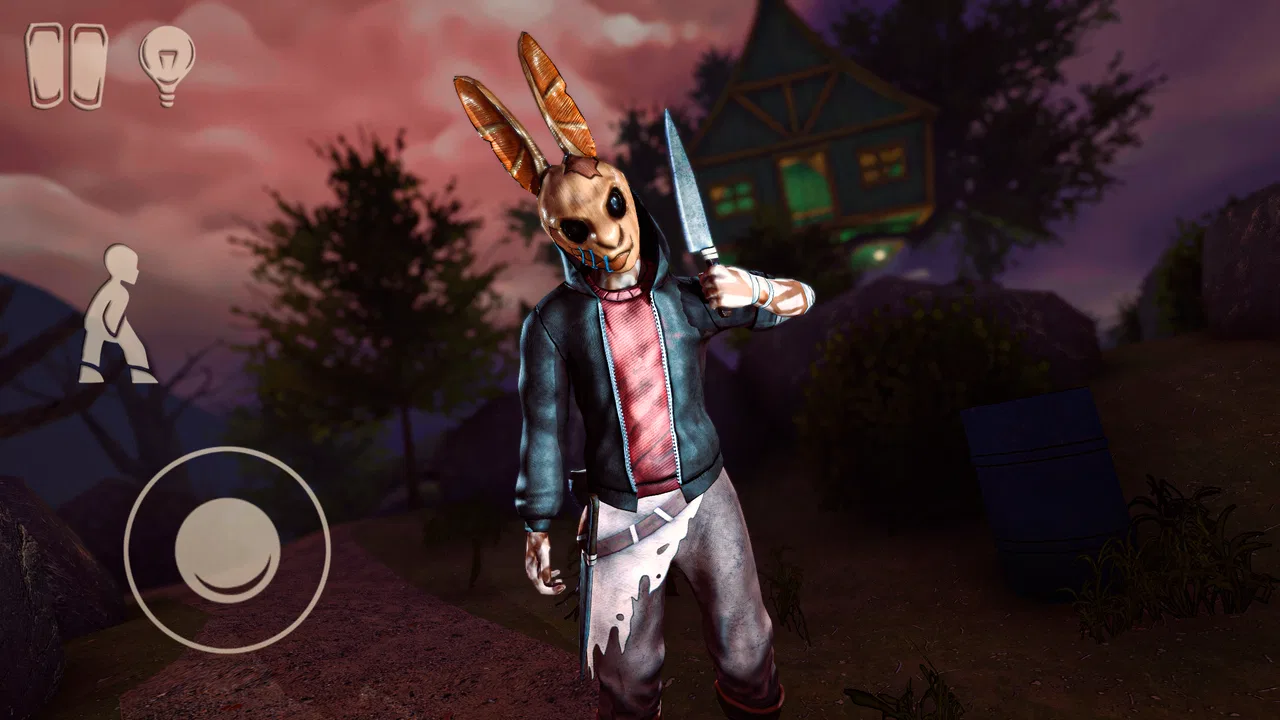
Horror Tale 1: Kidnapper is the kind of adventure game I would suggest to someone who wants a short, tense horror experience rather than a huge action game. I played it as a story-led escape adventure, and what stayed with me was its focus on fear created by pursuit, uncertainty, and the feeling that Tom and his neighbours are trapped in a dangerous situation. It is free to start, aimed at players aged 10 and over, and comes from Euphoria Horror Games.
The central capability here is not simply making the screen look frightening. The game turns exploration into a pressure test: I had to pay attention to where I was going, think before moving forward, and treat every unfamiliar area as a possible threat. That approach gives the adventure its identity. Instead of relying on constant combat or a long list of complicated systems, it asks me to stay alert while following the mystery surrounding the kidnapping.
That makes the game especially approachable for players who enjoy horror but do not necessarily want an advanced survival-horror simulation. At the same time, its age rating means younger players may find some scenes or the general atmosphere uncomfortable. I would still treat it as a horror title first, even though it is accessible enough for a broad audience.
You May Also Like

 Blood Strike: 2.5 Anniversary
Blood Strike’s Loadouts Turn Every Drop Into a Tactical Gamble
A close look at Blood Strike’s custom loadouts: how fast access to signature weapons reshapes its battle royale rhythm, rewards preparation, and narrows the gap between fights.

 Pandora - Music & Podcasts
Pandora’s Music Is Easy to Start, but Harder to Recover
Pandora’s strength is its low-effort path from a seed to a station. Its weak spot is how much confidence it asks you to place in connection, setup, and quiet recovery.

 8 Ball Pool
 Is Built on Rivalries, Rematches, and Routine
A close look at the rivalries, rematches, shared routines, and unanswered safety questions that turn a quick pool match into a persistent mobile community.

 Samsung Music
’s Quiet Strength Is Playing What You Already Own
Its reach comes less from spectacle than from dependable access to a personal library. That simplicity is both the app’s strongest retention engine and its ceiling.

 AccuWeather: Weather Radar
AccuWeather Review: A Quick, Clear Forecast for Everyday Decisions
For everyday plans, the best forecast is the one you can understand quickly. AccuWeather makes rain timing, radar, and local conditions easy to act on, with a few trade-offs.

 Hill Climb Racing
Why Hill Climb Racing Still Turns Crashes Into One More Run
A tiny car, a bumpy hill and one more upgrade: Hill Climb Racing keeps resurfacing because its simple chaos makes every near-miss feel personal.
More From Our News Desk



How the fear of being followed shapes the adventure
I’ll look at how the sense of pursuit changes the way I explore, then connect that tension to the game’s goals and pacing. One useful approach is to treat each new area as a chance to orient yourself before moving on; that keeps uncertainty suspenseful rather than confusing.
Exploration becomes the main challenge
In many mobile adventure games, moving through a location is mostly a way to reach the next objective. Here, movement carries more weight. I found myself checking surroundings, remembering paths, and thinking about whether it was safe to continue. That changes the rhythm considerably. A simple search can feel stressful because the game encourages me to imagine what might happen before anything actually does.
This is the strongest part of the experience for me. The threat works best when I am not rushing. I have to observe the environment and make decisions with incomplete information. That is a useful design choice for a phone game because it gives ordinary exploration a purpose without requiring a complicated control layout or a deep inventory-management routine.
The result is a game that rewards patience. If I move carelessly, I lose the atmosphere and make the experience feel like a sequence of random reactions. When I slow down, the tension has room to build. I recommend playing with headphones if possible, not because the game becomes unplayable without them, but because sound cues and quiet moments are more effective when outside distractions are reduced.
Tom and the neighbours give the story a human focus
The adventure is framed around Tom and his neighbours, which gives the horror a more personal direction than an isolated haunted-location scenario. I am not simply wandering through a strange place with no context. The situation connects the characters to the danger, and that makes the investigation easier to follow emotionally.
I also like that the story provides a reason to keep exploring. The objective is not just to collect items or reach an exit. There is a mystery to understand, and the characters make the events feel connected. Players who prefer narrative motivation over endless combat will probably get more from this setup than players looking for a conventional action game.
One practical tip is to pay attention to the order in which you discover things. When a game uses tension and mystery together, rushing through every interaction can make later events feel less meaningful. I found it more satisfying to pause after a discovery and consider what it changed about the situation instead of immediately sprinting toward the next point.
Why the mobile format works reasonably well
The game is built for Android devices that can run at least version 7.0, so it is not restricted to only the newest phones. That broad compatibility matters for a free adventure title, especially if you are installing it on an older spare device rather than a current flagship. I would still close other demanding apps before playing, particularly if your phone already struggles with 3D games, but the operating-system requirement is relatively approachable.
Touch controls can never provide exactly the same feeling as a console controller, and that is one of the places where the mobile format shows its limits. Horror depends on quick, confident movement, while a virtual control scheme can sometimes make positioning feel less natural. I did not see that as a reason to dismiss the game, but it does mean that the experience is better suited to deliberate exploration than frantic precision.
The current version is 1.6.2, which is useful to know when checking whether your installation is up to date. I would install the latest available version before judging performance, since older builds may not reflect the experience intended by the developer.
A realistic evening use case
I can easily imagine playing this after dinner in a quiet room, with a short session planned before bed. The game works well in that situation because it creates a focused mood without asking me to commit to a massive open world. I could play for a while, stop after a tense sequence, and return later without needing to remember a huge amount of background information.
That same quality can be a disadvantage if you want a relaxed game to play while watching television. Horror Tale 1: Kidnapper benefits from attention. If I keep looking away from the screen, I miss visual details and lose the tension that comes from carefully reading the environment. It is not a good choice for background play or for a commute where interruptions are constant.
For a group of friends, it may work as a pass-the-phone experience, with each person helping decide where to search or what to do next. I would not describe it as a multiplayer game, though. Its appeal comes from individual exploration and suspense, so the social value is more about discussing choices than sharing a live session.
Small habits that improve the experience
My first recommendation is to avoid treating every area like a race. The game’s main strength depends on anticipation, and sprinting through the environment can make the threat feel less deliberate. I also suggest remembering recognizable locations rather than relying on random wandering. If you become disoriented, the tension can turn into frustration, while a basic mental map keeps the fear focused on the story.
Another useful habit is to separate observation from reaction. When something surprising happens, I try not to tap wildly at once. Taking a moment to identify the goal usually produces a better result than moving without a plan. This is especially helpful on a small screen, where hurried input can send a character in the wrong direction.
Finally, I would play it in a setting that suits the tone. Headphones, a moderate screen brightness, and a quiet room do more for this game than simply increasing the volume. The point is not to make the experience uncomfortable; it is to remove distractions so the suspense can work as intended.
Where the game asks for patience
The same pursuit-focused design that creates tension can also expose a weakness. Players who prefer immediate action may find the slower sections uneventful. There are moments when the game expects me to search, interpret, and wait for the next development instead of constantly rewarding progress with combat or spectacle.
I also would not recommend it to someone who dislikes being chased or feeling uncertain about safety. That discomfort is central to the experience, not a minor feature that can be ignored. A puzzle adventure with a calmer atmosphere would be a better alternative for players who want exploration without horror pressure.
Another trade-off is the free-to-play structure. The game costs nothing to begin, but it includes in-app purchases priced at $1.49 per item. That does not automatically make the experience unsuitable, yet it is worth remembering if you prefer games with one fixed purchase and no optional spending. I would decide in advance whether I am willing to make purchases and avoid treating them as part of the basic recommendation.
Because the content rating is Everyone 10+, the game is more accessible than many extreme horror releases. However, the rating should not be mistaken for a guarantee that every player will find it mild. The kidnapping theme, threatening atmosphere, and suspense may still be too intense for sensitive children. I would use personal judgement when deciding whether a younger player should try it.
How it compares with other mobile adventure choices
Compared with a conventional puzzle adventure, this game gives atmosphere a larger role. In a standard puzzle title, I might focus mainly on logic and completion. Here, the same search process is colored by fear, so the emotional response becomes part of the challenge. If you want a pure brain teaser, another option will probably be more satisfying. If you want puzzles and exploration to feel risky, this one has a clearer advantage.
Compared with action-heavy horror games, it is less about overpowering enemies and more about surviving the situation through awareness. That makes it a better fit for players who enjoy story and suspense, but a weaker choice for anyone expecting frequent combat, weapon upgrades, or a power fantasy. The game’s appeal comes from vulnerability.
It also occupies a middle ground between a quick scare app and a full-length horror campaign. It has enough narrative framing to give the adventure direction, while remaining easy to approach on a phone. I would choose it for a focused horror session, not as a replacement for a deep console-style production with extensive systems and cinematic presentation.
Who gets the most from this particular game
The best audience is someone who enjoys being guided through a mysterious situation while still having to pay attention to the surroundings. Fans of mobile horror adventures, younger teens who are comfortable with suspense, and casual players looking for a free story-driven game are the most natural matches.
It is also a sensible first step for someone curious about horror games but nervous about extremely graphic or complex releases. The straightforward premise makes it easier to understand what I am doing, while the threatening atmosphere provides a genuine sense of danger. I would begin with a short session and see how the tone feels rather than assuming the age rating tells the whole story.
On the other hand, I would skip it if your main priorities are competitive play, relaxing puzzles, or long-term character progression. It is not designed around those goals. Players who dislike repetition during searching, have little patience for suspenseful pauses, or want a game that can be played with half their attention should choose something else.
The large player response suggests that the concept has reached a substantial audience: the game has a 4.7 average from around 70 thousand ratings and more than 5 million installs. Those figures do not guarantee that every player will enjoy its pacing, but they do show that the formula has found a strong audience. I see that as a reason to try it, not as a substitute for matching the game to your own taste.
My recommendation after spending time with it
The real strength of Horror Tale 1: Kidnapper is the way it makes ordinary exploration feel unsafe. That single capability shapes almost every useful decision: where I look, how quickly I move, whether I listen carefully, and how I interpret the story around Tom and his neighbours. It is more effective when I cooperate with that pacing instead of demanding constant action.
As a free adventure game from Euphoria Horror Games, it offers an easy entry point into mobile horror. The optional purchase structure is something to keep in mind, and the touch controls may not satisfy players who want precise high-speed movement. Still, those limitations do not erase the atmosphere or the clear narrative purpose.
I would recommend giving it a try if you want a suspenseful phone game for attentive, relatively short sessions. Play somewhere quiet, take time to observe, and do not judge the slower moments too quickly. If you want a calm puzzle game or an action-focused horror title, this is probably not the right choice. For me, though, its focused pursuit-and-exploration design gives it a distinct place among mobile adventure games.
In the end, Horror Tale 1: Kidnapper works because it understands that fear often comes from not knowing what is around the next corner. It does not need to overwhelm me with systems to keep me interested. When the atmosphere, story, and cautious exploration line up, the game delivers an engaging horror adventure that is easy to start and surprisingly good at making a familiar phone screen feel threatening.
FAQs for Horror Tale 1: Kidnapper
01What is the main objective of Horror Tale 1: Kidnapper?
Horror Tale 1: Kidnapper is a suspense-filled horror game where your primary objective is to solve the mystery behind a series of kidnappings. You'll need to explore eerie environments, solve puzzles, and avoid the clutches of the kidnapper to uncover the truth and save your friends.
02Is Horror Tale 1: Kidnapper suitable for all ages?
Horror Tale 1: Kidnapper is designed for mature audiences due to its intense horror themes and suspenseful gameplay. It may contain scenes that are frightening or disturbing for younger players, so parental discretion is advised for those under a certain age.
03What are the system requirements for playing Horror Tale 1: Kidnapper?
To run Horror Tale 1: Kidnapper smoothly, your device should meet certain specifications. For Android, a device running version 5.0 or higher is required. For iOS, ensure your device runs iOS 11.0 or later. Adequate storage space and RAM are also needed to handle the game's graphics and features.
04Does Horror Tale 1: Kidnapper offer in-app purchases?
Yes, Horror Tale 1: Kidnapper includes in-app purchases that allow players to enhance their gaming experience. These may include items such as hints, power-ups, or additional content. While the core game is free, these purchases can help you progress more easily.
05Can I play Horror Tale 1: Kidnapper offline?
Horror Tale 1: Kidnapper can be enjoyed without an internet connection, making it perfect for on-the-go gaming. However, some features, like updates or certain in-app purchases, might require an internet connection to access and download. Always check for updates when online to ensure the best experience.
Pros
- Immersive storyline with engaging twists.
- High-quality graphics enhance the horror experience.
- Challenging puzzles add depth to gameplay.
- Atmospheric sound design heightens tension.
- Intuitive controls make navigation easy.
Cons
- Limited replay value once completed.
- Some in-game hints are too vague.
- Occasional lag on older devices.
- Requires internet connection for updates.
- Ads can interrupt gameplay immersion.

Horror Tale 1: Kidnapper
Gallery